Moving house involves dozens of decisions, and if you have a cat flap installed, you may be wondering what happens to it when you move.
Can you take the cat flap with you? Should you leave it for the next homeowner? Can the opening be removed or covered? And what happens if you want a different type of cat flap at your new property?
The answer depends largely on how the cat flap has been installed and whether it is fitted into a door, uPVC panel, window or glass unit.
Table of Contents
- Can You Take a Cat Flap With You?
- Cat Flaps Installed in Glass
- Cat Flaps in uPVC Panels
- What Happens When You Leave a Cat Flap Behind?
- Installing a Cat Flap at Your New Home
- Choosing a New Cat Flap
- Moving With a Microchip Cat Flap
- Should You Replace the Installation?
- Frequently Asked Questions
- Final Thoughts
Can You Take a Cat Flap With You?
Technically, the cat flap itself may be removable, but that does not necessarily mean the entire installation can simply be transferred to your new property.
The opening and surrounding structure are specific to the original installation.
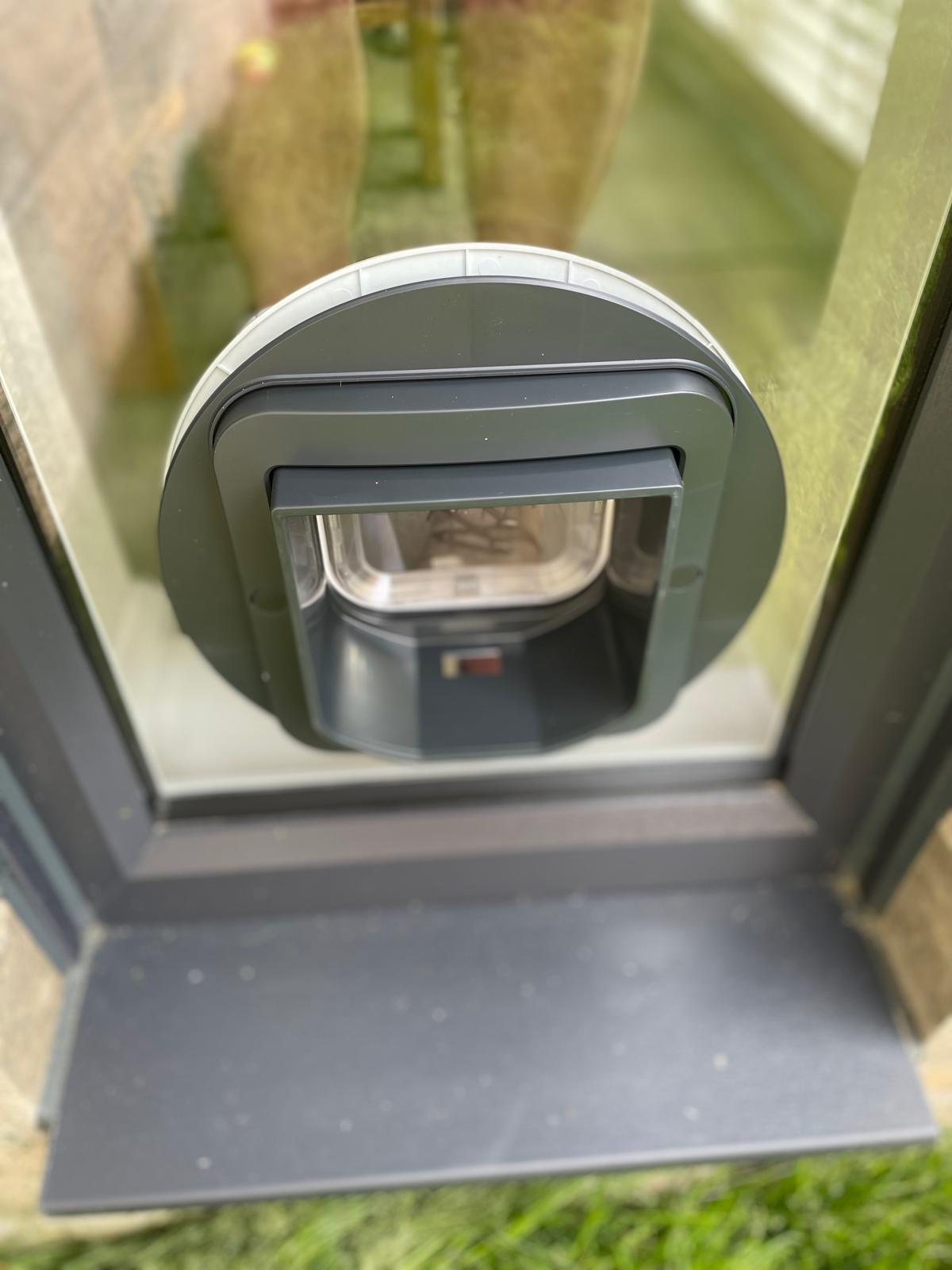
For example, a cat flap fitted into a bespoke double-glazed sealed unit has been manufactured around the position and dimensions of that particular installation.
Your new home may have completely different glass dimensions or a different door configuration.
Cat Flaps Installed in Glass
Glass installations require particular consideration when moving home.
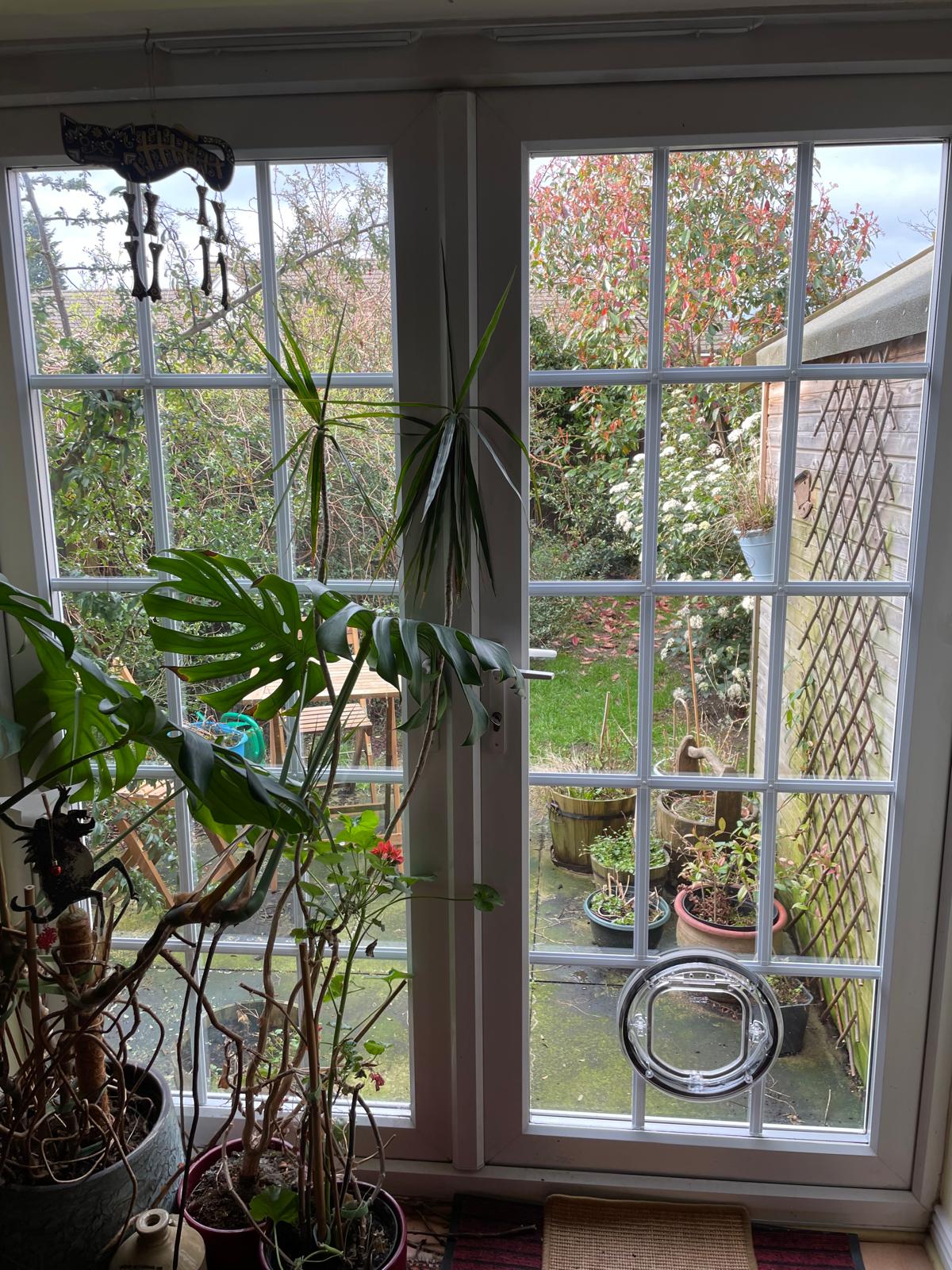
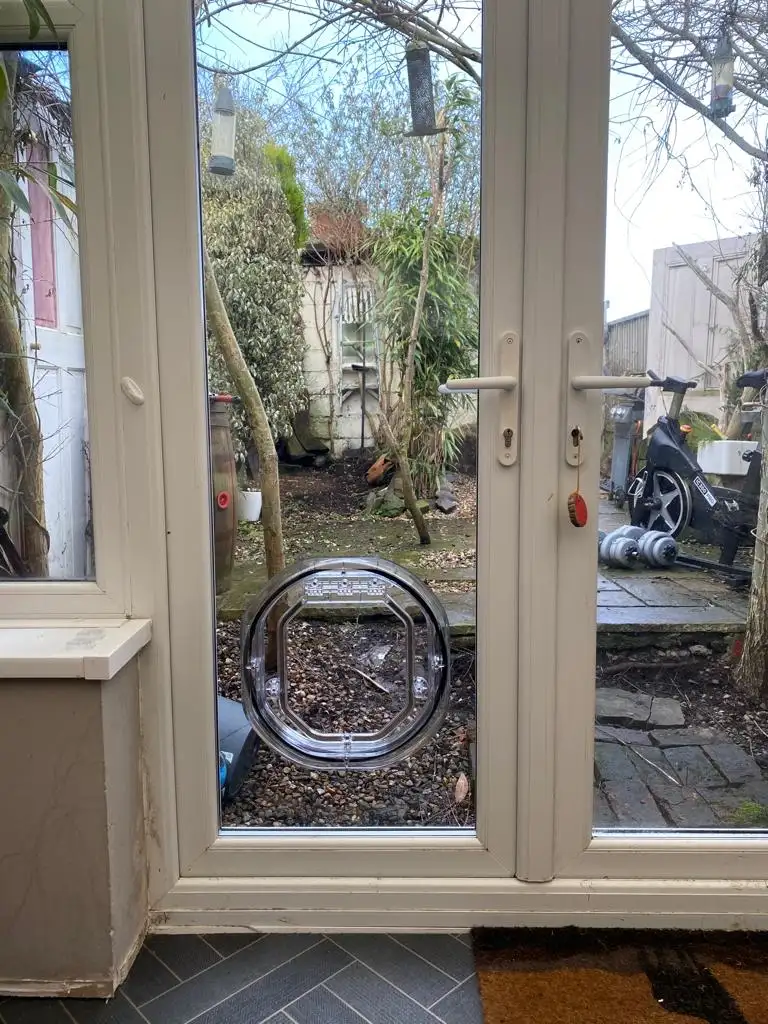
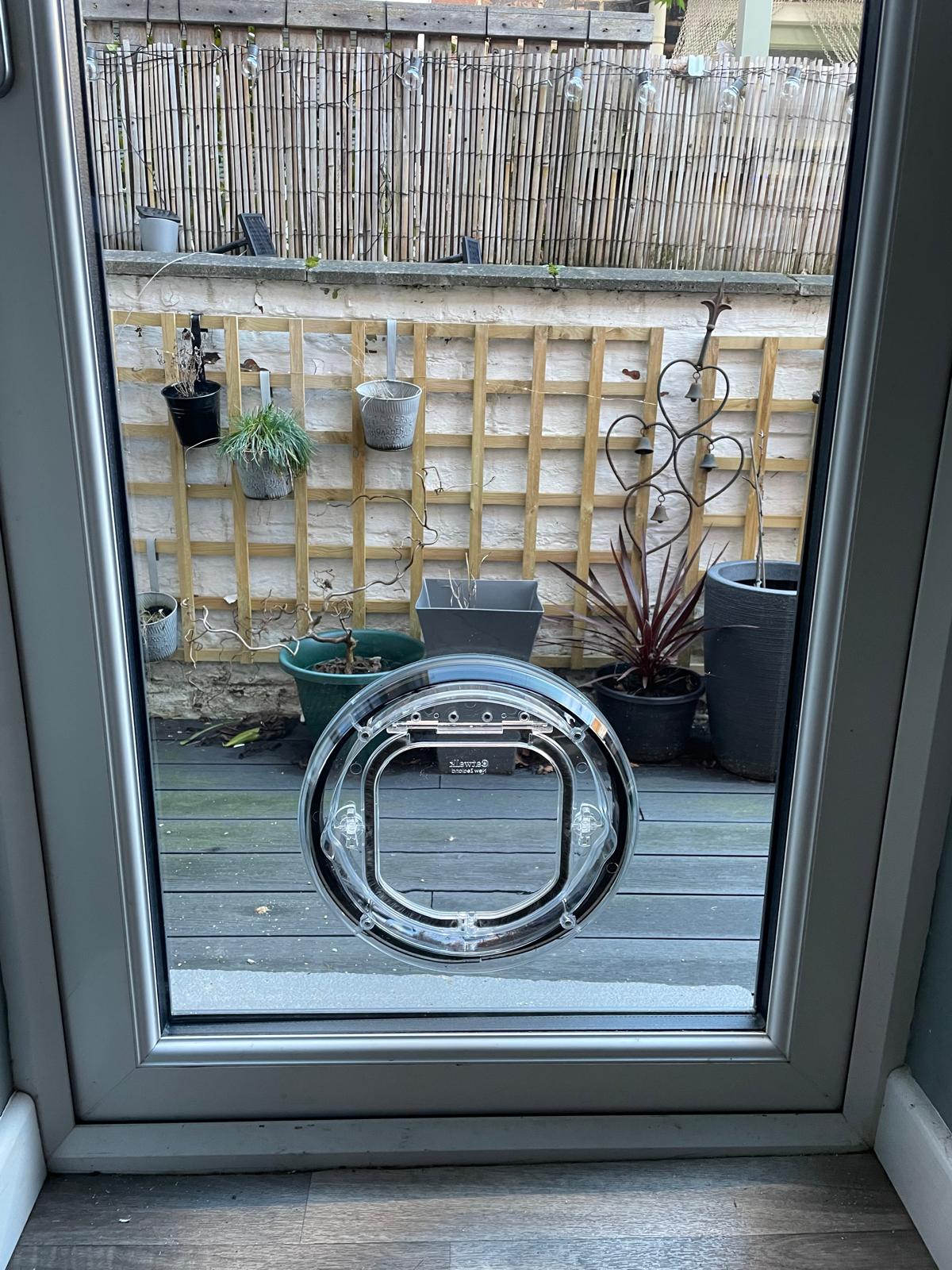
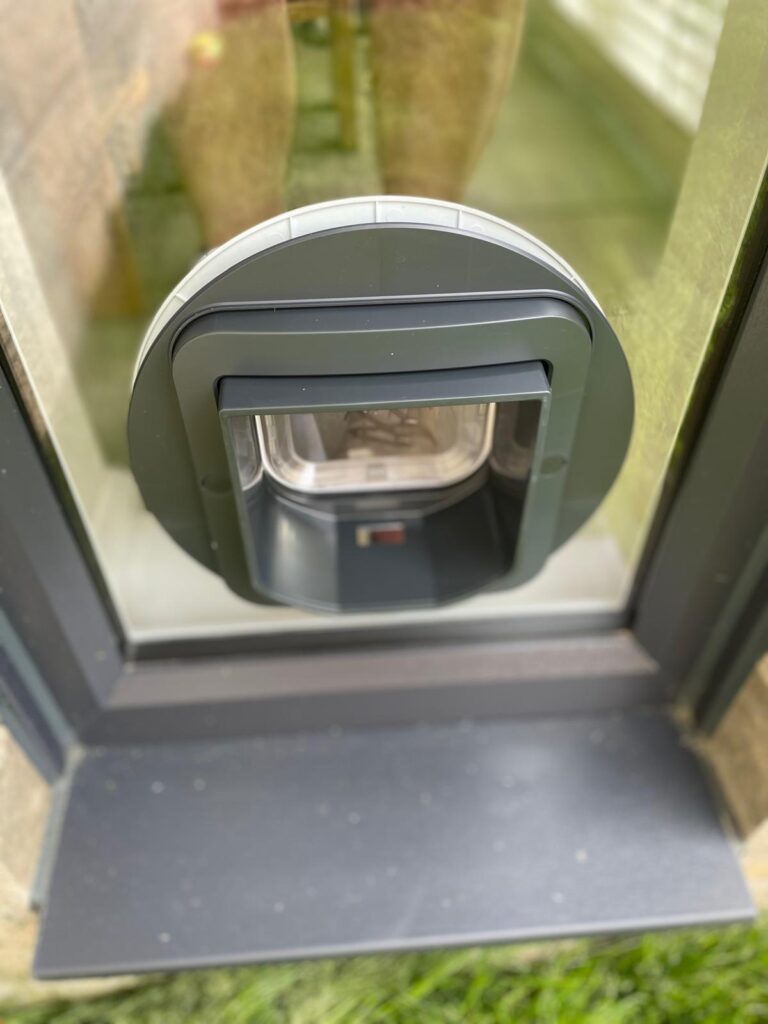
If your cat flap is installed in a double-glazed sealed unit, the glass is normally manufactured specifically for that installation.
If you remove the cat flap, the opening remains part of the glass unit.
Simply removing the flap does not restore the glass to its original condition.
If you are selling your home, you should therefore consider whether the cat flap is something you want to leave as part of the property.
Cat Flaps in uPVC Panels
The situation can be different with uPVC panels.
A cat flap may be installed into a replacement panel specifically designed to accommodate the opening.
If you are moving, you may be able to replace the panel if you want to return the door to its previous configuration.
The exact solution depends on the door and panel construction.
What Happens When You Leave a Cat Flap Behind?
If you leave the cat flap installed when moving house, it may be useful to explain its operation to the new homeowner.
This is particularly important if the flap is:
- Microchip controlled
- Programmable
- Battery powered
- Configured for specific cats
- Equipped with different locking modes
Providing the new owner with the manufacturer’s instructions can also be helpful.
Installing a Cat Flap at Your New Home
Moving house can also be an opportunity to install a new cat flap that better suits your needs.
Before arranging installation, consider:
- Where your cat needs outdoor access
- The type of door or window available
- Whether the installation involves glass
- Your cat’s size
- Whether you need microchip recognition
- Whether you want locking controls
- The most practical location
You should ideally assess these factors before purchasing the cat flap.
Choosing a New Cat Flap
Your new property may have different requirements from your previous home.
For example, your previous cat flap may have been installed in a wooden door, while your new property could have a glazed patio door.
Different surfaces require different installation approaches.
If your new home has double glazing, make sure the cat flap is suitable for glass installation before ordering.
Moving With a Microchip Cat Flap
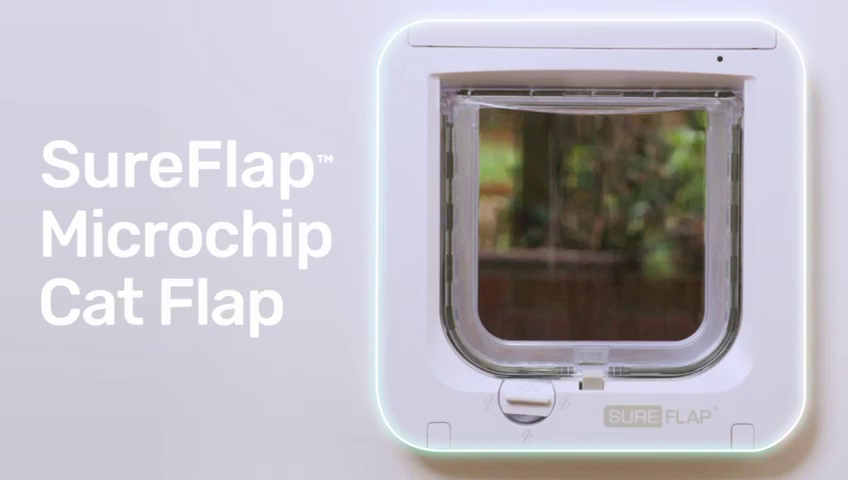
If you are moving with your cat, remember that a microchip cat flap may need to be programmed for your cat.
The flap does not automatically know which cat should be allowed through simply because it is installed at a new property.
Depending on the model, you may need to:
- Reset the existing settings
- Register your cat’s microchip
- Test the access function
- Check the locking settings
- Make sure your cat can use the flap comfortably
Always follow the instructions supplied with your particular model.
Should You Replace the Installation?
Sometimes replacing the entire installation makes more sense than trying to move an existing cat flap.
This can be particularly relevant if:
- The new property has different glazing
- Your cat needs a different size
- You want a microchip model
- The old flap is damaged
- The existing installation is several years old
- The new location is more suitable
A new installation can be designed specifically for the new property.
Cat Flap Installation in Glass at Your New Home
If your new home has a glazed door or window, professional installation can help determine the most suitable approach.
For double glazing, the existing sealed glass unit may need to be replaced with a new bespoke unit manufactured with the required cat flap opening.
The process can include measuring the existing unit, confirming the cat flap specifications and arranging the replacement sealed glass before fitting it into the frame.
Frequently Asked Questions
Can I move my cat flap to another house?
The cat flap itself may be reusable, but the surrounding opening and installation are specific to the original door, panel or glass. A new installation may therefore be required at your new home.
Can I remove a cat flap from double glazing?
The cat flap can be removed, but the opening in the sealed glass unit remains. Restoring the glass usually requires replacement of the relevant sealed unit.
Should I leave my cat flap when selling my house?
This depends on your circumstances and the arrangements for the property. If you leave it installed, providing instructions for the new homeowner can be useful.
Can I install a different cat flap in my new house?
Yes. The new property can be assessed to determine which cat flap and installation method are appropriate.
Can you install a cat flap in a new home’s double glazing?
Yes. Suitable double-glazed units can be replaced with bespoke sealed units manufactured to accommodate the chosen cat flap.
Final Thoughts
Moving house does not mean you have to give up the convenience of a cat flap.
However, the installation itself is closely connected to the door, glass, window or panel where it was fitted. This means moving the flap from one property to another is not always straightforward.
If your new home needs a cat flap, having the installation assessed before purchasing a new model can help you choose the right solution for your property and your cat.